Youth for Accessible Urban Spaces
Inclusive
Cities
Making cities easier to move through, together.
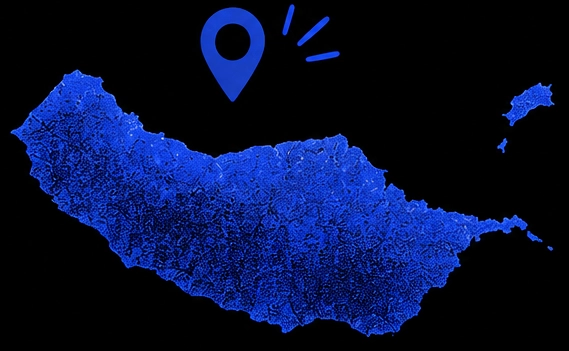
Cities work differently depending on who is moving through them. Inclusive Cities brings young people from Madeira and Palermo into the middle of that conversation, mapping barriers, spotting good practice, and turning everyday experience into practical public action.
Why accessibility matters in
Madeira and Palermo
Inclusive Cities looks at accessibility in the real world:
the pavement, the crossing, the doorway, the route between places, the missing bench, the steep slope, the sign no one can read, the entrance that technically exists but still doesn’t work for many people.
The project connects young people, people with reduced mobility, and local actors to document those problems and push for practical change.
Why this
project exists
Mobility barriers still shape daily life in ways that are easy to ignore if you don’t face them yourself. Inclusive Cities opens that up through direct observation, lived experience and shared discussion, so accessibility stops being an abstract topic and becomes something people can see, name and act on.
What the
project does
The project links Madeira and Palermo through workshops, mapping, dialogue and youth-led public action.
Participants identify barriers, document what they find, test solutions, meet local stakeholders, and turn their findings into digital tools and practical resources that can be used after the project ends.
Who it is for
The main focus is young people from Madeira and Palermo, especially those who face barriers to participation or live with mobility-related limits, alongside peers who want to understand accessibility better and take part in civic work.
Schools, NGOs, municipalities and local groups are part of the wider audience.
Project
Partners
Associação
My Madeira Island
Madeira, Portugal
Coordinates the project and leads communication, local outreach in Madeira, and the digital side of the public platform.
Associação My Madeira Island is a non-profit organization focused on sustainable cities, youth empowerment, and cultural exchange in line with the UN Sustainable Development Goals.
Using non-formal education, they design and run training courses, youth exchanges, and community initiatives that build civic competencies.
As the main coordinator of Inclusive Cities, they lead digital platform development, public outreach, and international dissemination workflows.
Uniamoci APS
Palermo, Italy
Leads from Palermo with strong practice in disability inclusion, accessible participation, and local community work.
Formed in 2008, Uniamoci APS is a social inclusion association based in a Palermo center reclaimed from assets confiscated from organized crime.
The organization specializes in the empowerment and social protection of youth and adults with disabilities through daily non-formal workshops, creative arts, and international volunteering.
For Inclusive Cities, they ground the fieldwork in proven disability inclusion methods, driving the localized community outreach and spatial mapping in Palermo.
Events
(Local and international)
International mobilities
1
Palermo
Mobility
First International Workshop
Palermo is where the practical work starts. The first international workshop is the place for walking the city, testing how barriers and good practice are recorded, comparing how different people move through the same streets, and turning those observations into the first shared methods.
Key activities
Coming Soon
2
Madeira
Mobility
Closing Session
Madeira serves as the closing international mobility, gathering participants to review collected data, compare spatial evidence across both urban environments, iterate on the digital platform, and finalize reusable community materials.
Planned activities
local (Simultaneous)
Unheard Voices, Unseen Barriers
Living Library
A one-day community event designed to promote dialogue and advocacy for mobility inclusion. Young people, youth workers, policy-makers, and individuals facing mobility challenges come together to share personal experiences, discuss urban barriers, and co-create accessible solutions.
Accessibility Detectives
Urban Accessibility Workshop
An introductory workshop on inclusive urban planning followed by guided field research. Armed with the project's mapping tool, participants identify, log, and analyze real-world structural barriers, proposing practical improvements and testing their feasibility.
Amplifying Voices
Youth-Led Advocacy Campaign
A creative workshop that equips young participants with digital media skills and advocacy strategies. The team builds high-impact awareness campaigns using social media assets, mini-documentaries, blog articles, and photography exhibitions to highlight local accessibility issues.
A Dialogue on Mobility and Policy
Visit to Local Municipality
A structured roundtable bringing youth, municipal officials, and NGOs together to address urban mobility issues. Participants formally present the project's key findings, share documented case studies, and introduce the digital mapping tool to spark local policy debate.
Coming soon
Project Outcomes
Tools and resources from Inclusive Cities.
1
Web App
(Public Mapping Hub)
The Web App is a public, interactive map designed to turn everyday experiences into real policy change. It allows anyone to flag accessibility issues, track improvements, and provide concrete evidence for municipal action.
How it works:
Report barriers:
The public can directly report bad accessibility practices, structural barriers, or blocked routes they encounter in the city.
Review and pin:
Project moderators review each user submission for accuracy before pinning it live onto the public map.
Drive policy proposals:
The pinned examples and collected data are gathered into a master database used to build concrete accessibility proposals for local decision-makers.
Practical Toolkit Asset built straight from field workshops and regional case studies. Crafted specifically to enable direct replication, this reusable resource is designed to help outside youth organizations, schools, community NGOs, and local councils establish similar initiatives.
Core Resource Contents:
Step-by-Step Field Guides:
Documented routes, workshop agendas, and field-tested mapping methods used in Palermo and Madeira.
Practical Toolkit Assets:
Reusable route evaluation sheets, participant prompt cards, thematic checklists, and entry submission templates.
Case Summaries & Action Steps:
In-depth reviews of localized urban challenges, structural case notes, and facilitation tips for civic moderation.
Inclusive Formats:
Full text published in accessible, screen-reader-optimized HTML versions side-by-side with multilingual PDF manuals.